Tofu at Home

As I men­tioned before, I was recently liv­ing at my par­ents’ house for two months. I asked them when it would ever be inap­pro­pri­ate for me to go “home” and live with them, rent-free, with meals included. Luck­ily for me, they answered,

never.”

So until I’m too old to do so, I’m going to be doing things like going back home to my par­ents’ house when I’m sick and using their Vita­mix to make tofu.

My friend Sarah from RecipeRe­lay first started me think­ing of home­made tofu, when she cre­ated her own batch last year. As much as I eat the stuff, I never really con­sid­ered it pos­si­ble to try mak­ing it at home. In the U.S., it’s so com­mer­cially sold that we often for­get it’s meant to be eaten fresh and hand-made. So with Sarah break­ing it down and pro­vid­ing a link to a step-by-step recipe I could fol­low, I was super inspired. But the task was still a bit daunt­ing, and with tofu so cheap at the mar­kets in China (as lit­tle as 10cents for a small block!), I never had the urge to try it myself in my own kitchen.

That, and I lacked a Cuisi­nart or Vita­mix to blend the soy­beans– a cru­cial step in the process for mak­ing tofu.

So with a few extra hours on my hands (and an arti­cle on tofu due the next day), I spent an after­noon at the home of my par­ents, tak­ing advan­tage of an industrial-strength blender, exper­i­ment­ing with soybeans.

I did plenty of read­ing prep before­hand. When DIY’ing in the kitchen– whether it be for marsh­mal­lows, ice cream sand­wiches, pop tarts, fig new­tons, or gra­nola bars- I def­i­nitely rec­om­mend doing your research and read­ing through a few dif­fer­ent recipes before rolling up your sleeves. In my case, I read and re-read Sarah’s expe­ri­ence, which directed me towards this web­site and very help­ful recipe. Given my time and resources (which was a lot and many, respec­tively), I was also able to make a trip to the local library where I sat in the cook­book aisle for an hour and skimmed a few books about soy and tofu

With my tofu research ses­sion fin­ished, I finally under­stood the very basic process that pro­duced tofu: a prod­uct of fresh soy milk, sep­a­rated into curds and whey, and then pressed. The magic ingre­di­ent that would pro­duce curds in the “milk” of the soy­bean extract was called the coag­u­lant, a cru­cial part of all tofu-making processes. The coag­u­lant used in tra­di­tional tofu mak­ing is a Japan­ese ingre­di­ent called nigari, a con­cen­tra­tion of var­i­ous salts that remain after the crys­talli­sa­tion of salts extracted from sea­wa­ter. While vis­it­ing the neigh­bor­hood Japan­ese super­mar­ket one after­noon I peeked in the salts and dashi aisle, and became over­whelmed at the selec­tion of salts and pow­ders, none of which were labeled in Eng­lish. Luck­ily as an alter­na­tive to nigari, Epsom salts (mag­ne­sium sul­phate), fresh lemon juice, or apple cider vine­gar can also be used to pro­duce the same cur­dling effects. The vari­a­tions in the results are seen mainly in the tex­ture of the tofu, and only slightly affect the taste. I decided to use some apple cider vine­gar that was already in the pantry.

I pro­cured a pound of organic soy­beans from the bulk grains aisle of Whole Foods to start my tofu-making adven­ture. After soak­ing the beans overnight and wak­ing to their plump soy­bean glory the next morn­ing, I got busy boil­ing, grind­ing, cook­ing and strain­ing the soy­beans. Fresh soy milk, as easy as that.

Press­ing for­ward, I fol­lowed instruc­tions care­fully and put my soy milk back on the stove, adding the coag­u­lant (in my case, apple cider vine­gar), and stir­ring as advised. As expected, a pot full of steam­ing soy milk soon sep­a­rated into small curds and whey. Lit­tle Miss Muf­fet, you’d be proud!

The curds were spooned into my own home­made tofu press – a rec­tan­gu­lar plas­tic Tup­per­ware con­tainer with holes punched through­out the bot­toms and sides, lined with cheese­cloth. With the curds weighted down with a bevy of canned ingre­di­ents, I let time do its job.

A short and sur­pris­ing 15 min­utes later, I checked on my result. There it was: the curds had com­pacted into one small rec­tan­gu­lar form. Home­made tofu, firmer than I had imag­ined, smaller than I would have liked, and a far more crumbly than I would have pre­ferred, but nev­er­the­less it was tofu!

For the step-by step recipe, jump over here.

A soft serving

Some­times when you’ve been shop­ping for ceram­ics for an hour, you need a lit­tle some­thing sweet before you con­tinue your day.

My mom and I ordered this vanilla soft serve with sea salt and Mandarin-flavored olive oil on a bright, sunny day in Sausal­ito. I’ve had desserts with sea salt, I’ve had olive oil cake and olive oil gelato, I’ve had choco­late with sea salt, but this was the first time I had ice cream with sea salt doused with olive oil.

I’m going to be drench­ing my ice creams in olive oil from now on. Because this fla­vor pro­file blew my mind.

Take note, really good olive oil and really great salt are needed. Really good soft serve sure doesn’t hurt, either (Nor does a mini blue­berry almond pastry).

The arti­sanal café scene is def­i­nitely some­thing that I’ve missed since I’ve been in China. In Cal­i­for­nia and New York, cof­fee shops and cafes show­case the fresh­est, most local ingre­di­ents and prod­ucts, eaten on long com­mu­nal recy­cled wood tables next to pretty hip­ster boys and girls. My boyfriend makes fun of me for being a “hip­ster”, but if an arti­sanal café is where hip­sters gather, I’ll hap­pily claim the moniker.

Soft Serve and café pho­tos taken at Café Cibo in Sausalito:

Cibo of Sausalito
1201 Bridge­way
Sausal­ito, CA 94965
Open Every­day, 7am-5pm

Heath Ceramics

I had din­ner with my best friend at For­eign Cin­ema in SF to cel­e­brate our (but, mostly hers) birth­days. She told me about a hot restau­rant in the city that used Ikea plates.

Ikea plates?! You can’t use Ikea plates in a city where Heath is on every table!”

I exclaimed this part jok­ingly, but also a bit sternly, and she laughed. She had told her hus­band the exact same thing.

I don’t know when it hap­pened, but some­time in the last few years, San Fran­cisco (and all my friends, it seems) pledged alle­giance to Heath Ceram­ics. It has some­thing to do with their local­ity to neigh­bor­ing Sausal­ito and the whole “local arti­san” deal, but I think it is mostly because Heath Ceram­ics exudes Bay Area aes­thetic. That 70’s style, hippie-flavored, earth-toned, solid beauty.

My mom and I were able to make it up to Sausal­ito to the Heath show­room while I was home. Though we didn’t take the fac­tory tour, we did man­age to spend a whole hour in the store, select­ing sev­eral wor­thy one-off pieces at up to 50% off their retail prices.

If you’re in the Bay Area and like to look at nice things, I’d rec­om­mend tak­ing a drive out to Sausal­ito– right across the Golden Gate Bridge.

Food just looks bet­ter on pretty plates.


Heath Ceram­ics
400 Gate Five Road
Sausal­ito, CA 94965
T: (415) 332‑3732 x13
Show­room Hours
Monday–Thursday
& Sat­ur­day 10–6
Fri­day 10–7
Sun­day 11–6

Red Remedies

After the first cou­ple of vis­its to the doc­tor, “rest” was all that was pre­scribed. Much to my drug-desperate pleas, I took her advice with seri­ous action, not ven­tur­ing out of the house for more than one hour at a time. When I finally felt well enough to move about the house, I took my mother’s pre­scrip­tion for some kitchen reme­dies, and made myself one large pot of Chicken soup and one pot of red bean soup.

Unlike the dried legumes of the West­ern World, Red Beans (红豆 or, adzuki beans in Japan­ese) are more com­monly found in desserts than in any savory form. Boiled down and cooked with sugar, red bean is tra­di­tion­ally found in paste-form, stuffed into fluffy white pas­try doughs in China or chewy unc­tu­ous mochis in Japan. In Tai­wan, red beans are often cooked down in soups for an equally home­opa­thetic and sweet delight.

Accord­ing to Dr. Mom, red foods such as red beans and dried chi­nese dates should be eaten to boost a person’s blood. Blood sup­ply? Blood lev­els? Blood cell count? Who knows, the Chi­nese just say blood. So when she heard that my white blood cell count came back sur­pris­ingly low in my ini­tial blood tests, her first reac­tion was to order me to make myself a pot of red bean soup. So much for stick­ing around the house and get­ting some rest, huh?

This soup might not be for every­one. If you’re like a lot of peo­ple I know, the thought of sweet beans might make you gag. Per­son­ally though, to me this soup is com­fort­ing and appeal­ing. It can be enjoyed hot or cold, depend­ing on the weather out­side or your mood, as a snack or a dessert. It’s extremely sim­ply, and can be plain (like the recipe I pro­vided) or spiced up with addi­tional ingre­di­ents, like the red chi­nese dates that I added, too. And accord­ing to Mom, it can cure ailments.

Chi­nese Red Bean Soup

Ingre­di­ents:

  • 1 cup dried red beans
  • 1 medium piece of rock sugar (or, 1/4 cup brown sugar)
  • water, for soak­ing and boiling

Direc­tions:

  1. Soak red beans in water overnight, or for a min­i­mum of 4 hours.
  2. Add red beans, sugar, and about 4 cups water into a medium saucepan. Bring to a boil. Turn down heat to low, stir a few times, and cover, let­ting the soup sim­mer for 1–2 hours. Add water for a soupier soup, or let it sim­mer down for less. Taste for sweet­ness, adding sugar to suit your tastes.
  3. Enjoy hot, or allow to cool and refrig­er­ate for a cold snack.

Egg Rolls: Same Same, but Different.

Same same, but dif­fer­ent. This is an expres­sion that every­one knows in Thai­land, and one that is heard around Asia in gen­eral. It’s some­thing that is silkscreened on many a t-shirt seen on the streets and the sub­ways. It also per­fectly epit­o­mizes how I feel about the egg roll.

In the Chi­nese lan­guage, the appe­tizer that Amer­i­cans know as the fried egg roll is actu­ally called a “spring roll”, stuffed with a light veg­e­tar­ian fill­ing com­prised of ver­mi­celli, shi­itake mush­rooms, car­rots, Chi­nese cel­ery, and green onions, then lightly fried and served pip­ing hot. Rarely does the roll take the form of those large, fried, cold, meaty and chewy chimichanga-like food­stuffs I remem­ber from my junior high school cafeteria.

I’m Chinese-American, and I can’t recall any instances when my fam­ily sat down and ate egg rolls as part of our meal (apart from my unfor­tu­nate and unplanned run-ins with the school lunch lady), regard­less of whether we were din­ing out or sit­ting around our own din­ing room table. I won­der, since when did egg rolls, along with the likes of one com­pletely fab­ri­cated dish named Gen­eral Tso’s chicken, rep­re­sent Chi­nese cui­sine, both in the minds and tastes of Amer­ica? Hav­ing seen the delin­eation of var­i­ous regional foods and fla­vors pos­si­ble in the Chi­nese cui­sine, I bow my head in dis­grace for the unfor­tu­nate mis­com­mu­ni­ca­tion that hap­pened some­where across the Pacific.

Wait a minute though, I sup­pose we did have egg rolls grow­ing up– or at least, a dish that when trans­lated is lit­er­ally “egg”+“roll”.

Mom would make these on spe­cial occa­sions, usu­ally for din­ner par­ties, but every once in a Blue Moon on those few occa­sions when there was noth­ing going on over the week­ends– no soc­cer games/piano recitals/basketball practice/OM meetings/birthday parties/speed read­ing classes/sculpture/oboe lessons/tutoring sessions/drawing classes sched­uled (Tiger Mom ain’t got nothin’ on my mother).

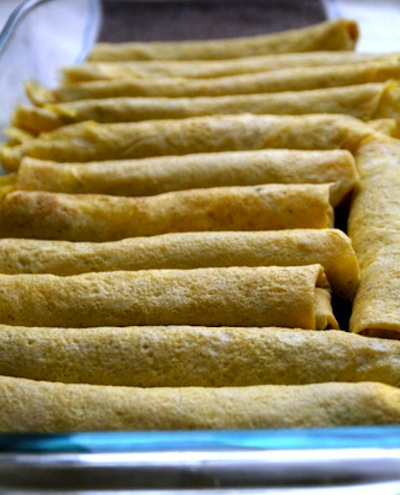
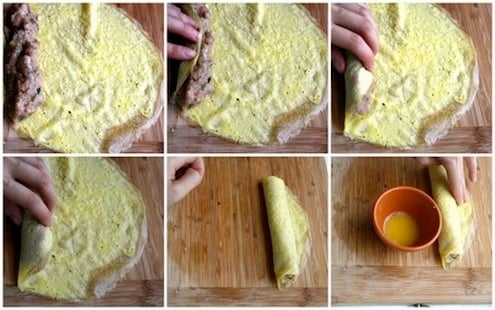
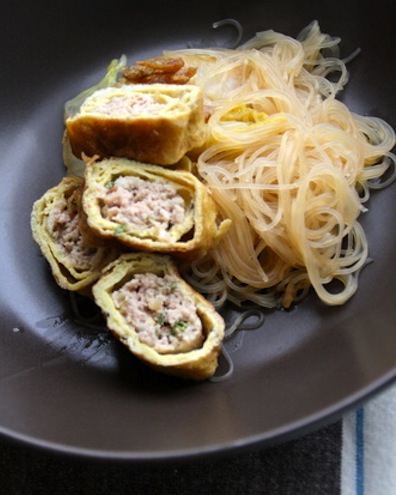
Her egg roll was just that, a thin crêpe-like layer of egg grid­dled into a pan­cake, then rolled up with a fra­grantly sea­soned ground pork stuff­ing inside. Cut thinly into bite sized pieces, on our table the egg roll would be arranged among a heap of sim­mered napa cab­bage and ver­mi­celli noodles.

egg roll_process

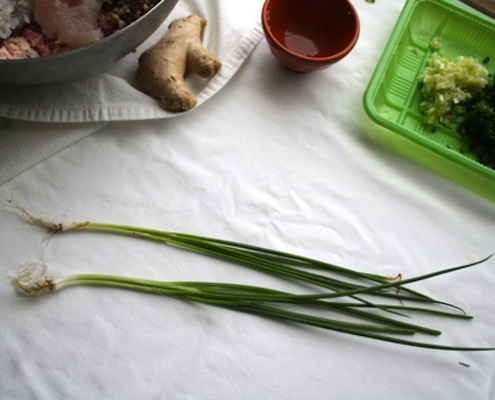
Pork is the meat of choice in China — although nowa­days the country’s inter­est in beef (not to men­tion dairy) is quickly gain­ing ground. Year-round avail­abil­ity of scal­lions, fresh mush­rooms, and gin­ger gives the cui­sine– and this dish in par­tic­u­lar– its sig­na­ture fla­vors. The chop­sticks as lone uten­sil gives rea­son for the delib­er­ate slic­ing into bite-sized pieces, and the labo­ri­ous prep coun­tered by a quick sauté/steam in a wok is exem­plary through­out all Chi­nese dishes.

This is an egg roll that is much more rep­re­sen­ta­tive of Chi­nese cook­ery than any egg roll you’ve encoun­tered in the past. It is a dis­tant cousin to its Amer­i­can coun­ter­part– but really, the rela­tion is so dis­tant they’re prac­ti­cally not related. They just some­how hap­pen to share the same name.

For the orig­i­nal post­ing of the arti­cle and a full recipe, head over to Hon­est Cook­ing, where I am one of their newest contributors!

Mango Cucumber Salsa

We miss Mex­i­can food a lot here. It’s like they say, you never know what you have until it’s gone– and grow­ing up in Cal­i­for­nia, where there are no short­age of tacos and bur­ri­tos and hot dogs wrapped in bacon (those are Mex­i­can, aren’t they?), we’re suf­fer­ing a bit here. Not to men­tion, I would kill for an elote from Café Habana right now (plenty of fresh corn at the mar­ket– but no cojito cheese for miles!)

When the recent issue of Saveur mag­a­zine rolled around, with it’s tan­ta­liz­ing cover of crispy tacos and bold text boast­ing “Secrets of Mex­i­can Cook­ing”, I was deter­mined to find a recipe that I could recre­ate, or at least adapt, here in South­ern China. After all, I find there to be many sim­i­lar­i­ties in Asian and Latin cook­ing– there wasn’t that huge Asian Fusion spike in the 90’s for noth­ing, let me tell you…

But I soon real­ized that most authen­tic Mex­i­can recipes call for very spe­cific dried or fresh chiles, or the need for good tor­tillas– none of which I are avail­able here. I toyed with the idea of sub­sti­tut­ing local chi­nese dried chilies in place of the New Mex­ico or Gua­jilo chiles. Though excel­lent and pow­er­ful in Chi­nese cui­sine, I doubt they would gar­ner the same savory Mex­i­can fla­vor I am crav­ing (would they? Does any­one know?). Per­haps my trip to Mex­ico City in the sum­mer will be just as much a pantry expe­di­tion as it will a reunion with friends…

In the mean­time, I’m still seek­ing out some good recipes and some good tricks to recre­ate the fla­vors of Mex­i­can cui­sine in my own kitchen. This week­end I made this shred­ded chicken taco dish again, an easy adap­ta­tion for a Guangzhou kitchen. Look­ing through a huge list of recently book­marked Cinco de Mayo themed recipes, I re-discovered the web­site Muy Bueno Cook­book along with this recipe for a mango salad, rem­i­nis­cent of the chile sprin­kled mango and jicama sold from carts on the street cor­ners in down­town LA. Rather than a chunky salad, I pre­ferred to scale it down to a salsa, and with magoes and cucum­bers both sold pro­lif­i­cally at the wet mar­ket, it was a no-brainer. The recipe called for plenty of chile pow­der in the salad, but I wanted a more nuanced spice in this salsa, and so also grabbed from the piles of mild pep­pers at the market.

Cucum­bers and pep­pers (along with taro root dis­played) at the wet market

Grow­ing up, I would fre­quently sit on a stool in the kitchen as I watched my mother cook in the kitchen. She would edu­cate me as she went along on the impor­tance of clean­ing up as she cooked, set­ting things out before she started stir fry­ing, and mak­ing sure to wash the dishes as she went along. At the time, I thought she was just being nit­picky, and franky hated these “lec­tures” I got when all I wanted was to watch the gar­lic and gin­ger siz­zle at the bot­tom of the skil­let. But I now real­ize that she was sim­ply teach­ing me the basics of what all good chefs know– set­ting your mise en place, mak­ing sure your work­sta­tion is san­i­tary and orga­nized. Funny how every­thing your mom tells you when you are lit­tle sud­denly makes sense when you’re older…

She also showed me other impor­tant skills, one being how to wield a knife. My mother could (and still can) pul­ver­ize gar­lic into the tini­est minced flecks, slice gin­ger into the thinnest sliv­ers, and art­fully cut car­rots and firm tofu into perfectly-square lit­tle cubes. The Chi­nese believe that the pro­por­tion of shapes and sizes of a dishes’ com­po­nents play a big part in the fla­vor and taste of a dish. Hence, the Chi­nese have an exten­sive vocab­u­lary for the prep work of dif­fer­ent cuts of meat and veg­eta­bles– sig­nif­i­cantly more than their West­ern friends.

When­ever I’m prep­ping a dish like this salsa, spend­ing much longer than any­one typ­i­cally would to make sure the shal­lots are appro­pri­ately, I com­pare them to how my mom used to do it. When peo­ple make salsa and their toma­toes are cut into huge, uneven chunks, the onions are in unap­pe­tiz­ingly large pieces, and the cilantro is not even chopped, I am a lit­tle uneasy. Maybe you’d say I was spoiled– I’d say I was taught well. In any case, I’d con­sider this a secret to a good salsa, or a salad, or any freshly chopped mixed veg­etable dish.


Mango Cucum­ber Salsa

inspired by this recipe from Muy Bueno Cookbook

Ingre­di­ents:

  • 4 small, ripe yel­low mangoes
  • 3 kirby cucumbers
  • 3 shal­lots, minced
  • 1 small bunch chi­nese cel­ery (or, one rib of reg­u­lar cel­ery), leaves discarded
  • 2 mild green pep­pers, minced
  • 1 mild red pep­per, minced
  • 1/4 cup cilantro, stemmed and packed, finely chopped
  • juice of one lime
  • salt, to taste

Direc­tions:

  1. Peel and cut man­goes into a small dice. The eas­i­est way to do this, I’ve found, is to: cut the stem-end of the mango off so you can eas­ily and securely set the mango on its end on a cut­ting board. Using a sharp knife, slice the peel off, down­wards, along the length of the mango. Keep turn­ing and trim­ming the peel off until your mango is “naked”. Then care­fully cut the meat off the pit in the largest slices pos­si­ble, and dice from there.
  2. Seed the cucum­bers, cut into spears and then a small dice
  3. Com­bine shal­lots, cel­ery, red and green pep­pers with lime and salt to taste. Mix well, allow­ing the shal­lots to mac­er­ate in the lime juice to lessen its sharp­ness. Com­bine mango and cucum­bers, and toss to mix thoroughly.
  4. Cover and let sit in the refrig­er­a­tor for at least 20–30 min­utes. Can be pre­pared a day ahead, if nec­es­sary, but shouldn’t be kept more than a cou­ple of days– which prob­a­bly won’t be a problem!

Yield: approx. 3 1/2 cups of salsa, or enough to feed 10–12 peo­ple for a taco dinner!

The Beauty of Bones

For­give the radio silence over the last few days. Between get­ting a part time job (not food related, there­fore, bor­ing and not worth writ­ing about here) and hav­ing my par­ents in town for a short 36hour visit, I really didn’t have a bit of spare time to write. I did, how­ever, had a bit of time last Fri­day to pre­pare a pot of soup to wel­come my mom and dad to China.

My mom’s cook­ing has a lot to do with my tastes and atti­tudes and opin­ions about food today. She’s been a pro­po­nent of eat­ing well, eat­ing bal­anced, and eat­ing nat­u­rally, long before Slow Food and Michelle Obama were at the fore­front of our nation’s poli­cies. She’s instilled in me a good sense for host­ing a small party of six and cook­ing as if a small nation was join­ing for din­ner. To her credit, I can wield a knife with basic grace, whether it be peel­ing a pear in one go or butcher­ing a whole chicken. There were a lot of sim­ple things she taught me about food and the basics of cook­ing through­out the course of my child­hood, and I am for­ever indebted to her for those things.

One tal­ent I learned early on from her was the mir­a­cle of soup-making. More often than not there would be a huge pot of pork/beef/chicken bones slowly sim­mer­ing away on our stove­top, the meat cooked until ten­der and the broth ready to be cooked with noo­dles for din­ner, reheated for lunch the next day…and usu­ally again even later for a Chi­nese ver­sion of the late night snack. My mom loved soup, and like most Chi­nese peo­ple believes there to be great heal­ing and med­i­c­i­nal pur­poses in a great stock.

Long after I left the house, and after read­ing recipe after recipe, I real­ized in addi­tion to the sooth­ing qual­i­ties of soup, there existed a great ver­sa­til­ity for meat stock. Today I have a basic recipe that fol­lows no spe­cific mea­sure­ments but always works, just like mom’s. If I’m sick, I’ll throw in triple the gin­ger. If I know I’m mak­ing a stock to be used for italian-mediterranean dishes, I’ll toss in var­i­ous dried herbs like rose­mary and sage. If I will prob­a­bly just be eat­ing the soup and stock for din­ner for the entire week, in will go some daikon radish, shi­itake mush­rooms and even­tu­ally, ver­mi­celli noodles.

Here in China, the meat mar­kets sing with the pos­si­bil­i­ties of soup mak­ing, much to my delight. Each ven­dor has dozens of cuts of meats and bones laid out on dis­play, from gelati­nous pigs’ feet to del­i­cate squab breasts. Approach­ing a pig butcher, my ask­ing for neck bones led to a vague fin­ger point­ing to a clus­ter of red meat sit­ting right in front of me. After a bit of clar­i­fi­ca­tion– mak­ing sure that yes, this is pig, and yes, these are neck bones, I was set to go. And from this, the pic­ture below, I made a big pot of pork and veg­etable soup to wel­come my mom and dad to China. Just like home.

The Spaghetti Chronicles, because it’s a long story.

As I may have men­tioned before, I am still await­ing the ship­ment of my kitchen (ando­hyeah, the rest of my things too), which should arrive at my door some­time next week. In the mean­time I’ve made do with the DiploMan’s kitchen goods, which are fine but you know, they’re just not mine. Plus the Diplo­Man doesn’t have crazy kitchen girl things, like a man­dolin, a scraper, mini whisks and mini spat­u­las, and not even a French Press. But he has lazy kitchen boy things, like an auto­matic wine opener. Why?

Any­way lest I stray too far into gad­get land, despite the lack of kitchen gear avail­able as well as sta­ple pantry items, I really wanted to make a big pot of spaghetti last week. This weather has me look­ing for one-pot won­ders, as the week before I made my mama’s chicken curry (which lasted us through the week). I fully accept the fact that I am a food snob (and proud of it!) like to use the best, most authen­tic ingre­di­ents (par­tic­u­larly when cook­ing Ital­ian food) and gen­er­ally try to make every­thing out of scratch. Because it’s always bet­ter that way. Before I left Brook­lyn I loaded up on essen­tial spices, pas­tas, canned goods, salsas.…my ship­ment looked like my 3rd grade earth­quake kit on MAJOR STEROIDS. But since none of this has arrived yet, I had no choice but to throw up my hands in defeat and head to the store to see what I could find. And here are a few things I brought home:

I know, I gri­maced in hor­ror too when I was forced to use these “chopped peeled toma­toes” instead of the req­ui­site San Marzano brand I’ve been spoiled with back home. And, don’t even get me started on the “Spaghetti Bolog­nese” mixed dried spices. The food snob inside of me is kick­ing my own arse. But, spices Ital­ian Spices are expen­sive here, and with some com­ing in the next week, I couldn’t afford to stock up on every spice in the store. Right?

Aside from these dried goods and the parme­san cheese nabbed at the super­mar­ket, I also went to my favorite wet mar­ket just across the island, where I was able to find the base for my ragu sauce: car­rots, cel­ery and onion for a mire­poix and lots of toma­toes, which I roasted to add in the sauce for extra fla­vor since I didn’t have any tomato paste avail­able. I took a cue from Smit­ten Kitchen and my friend Donna, and though I didn’t have beau­ti­ful sum­mer baby toma­toes to slow roast, these turned out just the way I wanted. Sud­denly a lit­tle ray of sun­shine shone on my mis­sion to cook Ital­ian with Chi­nese ingredients!

with gar­lic, ready to be peeled, chopped and tossed into basic tomato sauce

I also bought some ground beef, from a lady sell­ing all sorts of ground meat and meat fill­ings to wrap in dumplings– a com­mon sight to see in the mar­kets here in Guangzhou. There were two major dif­fer­ences with this meat, than with the meat I would have bought in an Amer­i­can Super­mar­ket. First, the grind was much finer, almost to a paste con­sis­tency, it was ground so thin. I real­ized the Chi­nese most often use ground meat to make chi­nese meat­balls, or stuff inside tofu or veg­gies, or wrap inside of buns– the Chi­nese would never be so bla­tant as to sautee their ground beef into a sauce! Addi­tion­ally, the fat to lean con­tent was higher than I was used to, which was dis­turb­ing only because I knew it would affect the tex­ture of the meat once cooked. And with these two obser­va­tions, I threw it into the pan.

As a side­note, I was ini­tially extremely wary of buy­ing any meat in China, and am now only mod­er­ately wary but have marched on and even bought myself a whole chicken from the butcher the other week (more on that later)! Buy­ing the ground beef for this sauce spawned an inner debate with myself about how exactly to go about buy­ing meat in China, espe­cially ground meat. Just because I am buy­ing all my food at my local mar­kets here doesn’t mean it comes from farm­ers with eth­i­cal and envi­ron­men­tal prac­tices, nor does it mean that the food is the fresh­est, untainted or unadul­ter­ated. You can’t trust that the prac­tices for rais­ing or slaugh­ter­ing these ani­mals is reg­u­lated, and fur­ther­more I am not in any place (in my lan­guage skills nor being in a host coun­try) to raise these ques­tions at the mar­ket. It puts me, an ulti­mate omni­vore, at the con­stant crux of a huge dilemma– one to be continued.

Any­way into my sauce even­tu­ally went mush­rooms and zuc­chini, because my mom always put zuc­chini in our spaghetti sauce grow­ing up. It also got a hunk of salted dried ham, for fla­vor, while it sim­mered on the stove­top. I sauteed a side of spinach, boiled the noo­dles al dente and voila! A spaghetti din­ner to warm our hearts and stom­achs. Pretty good for cook­ing out of my own com­fort zone, if you ask me!

Related Posts Plugin for WordPress, Blogger...