Homemade baguettes

image cour­tesy of RecipeRelay

Yes, these were home­made, just…not in my home!

Today on RecipeRe­lay, Megan (who I’ve got­ten to e-friend through work­ing with RecipeRe­lay), got down and floury with some home­made baguettes. I didn’t think any­thing could get more excit­ing than the home­made tofu expe­ri­ence recounted by Sarah last week, but I was wrong! This is a recipe I will SURELY be using here in Guangzhou, where fresh baked, arti­san bread is a rarity.

Good ingre­di­ents always yield a good prod­uct. So I’m excited to share that to top off Megan’s post, the ladies at RecipeRe­lay and the folks at King Arthur Flour have orga­nized a give­away! Just head on over to the blog post before 10pm EST tomor­row (May 19th), and share your favorite bread recipe in the com­ments (win­ner will be announced next Tues­day). One lucky reader will receeive a 5lb. bag of King Arthur AP Flour, a 5lb. bag of Bread Flour, a 1lb. bag of instant yeast, and a handy dough whisk (it’s okay, I didn’t know what a dough whisk was before today, either). Any­way, every­one will be a win­ner, because you’ll auto­mat­i­cally get Megan’s awe­some recipe for her pea shoot and ricotta canapé.

And finally, don’t for­get to check out Megan’s blog, Deli­cious Dish­ings. She made some Bruins-inspired cup­cakes the to kick off Game 1 of the Stan­ley Cup semi­fi­nals. I think I’ll need to ask her to whip up some for the Sharks. Any­thing to sweeten up their recent Game 2 loss :(

Perfect pizza dough

For some peo­ple, a sim­ple din­ner means boil­ing a pot of water and pour­ing it over Cup-O-Noodles. Voila!, din­ner in five minutes.

Don’t get me wrong, I don’t have any­thing against that. In fact, I remem­ber the occa­sional busy Sun­day after­noon grow­ing up, we’d do the same thing. Right before or after bas­ket­ball practice/girl scouts meetings/Costco trips/piano recitals, my par­ents, rush­ing from one child’s needs to the next, would “make lunch” by pour­ing boil­ing water out of an old tea ket­tle into four Cups-O-Noodles, set­ting the chop­sticks over the rim of the sty­ro­foam to keep the lid closed. After five min­utes worth of clean­ing up, clean­ing off, and clean­ing out the car, lunch wasn’t some­thing on the to-do list anymore.

But a “sim­ple” din­ner to me doesn’t mean some­thing I can heat up in five min­utes (although, that would be nice, and in case you didn’t know already I obvi­ously don’t have kids yet). A sim­ple din­ner is some­thing that I can pre­pare with min­i­mal atten­tion, I get with easy prep work, and can use up what­ever I have lying in the fridge. Oh, it also helps if it pairs well with the last bot­tle of Shi­raz in the cab­i­net.

Home­made pizza is on the top of this sim­ple din­ner list. To be more spe­cific, this home­made pizza is on the top of my sim­ple din­ner list, because it really is so. easy. to. prepare…especially when I have left­over tomato sauce in my fridge from the night before. I first read about it on The Wednes­day Chef blog ear­lier this year, and couldn’t believe when all I had to do was let a basic, lightly kneaded dough sit for about an hour, flat­ten it out, top it, and bake it for 10 min­utes. Some­times, I use the hour the dough needs to sit to paint my toe­nails or write a blog post. Other times, I use this hour to clean up around the house. The other day, I used this hour (plus some) to go play a round of bad­minton with B and then shower up.

What’s bet­ter, since we both love thin crust, the quan­tity of dough the recipe makes is best split into two, and the other half saved in the fridge to be rolled out for a sec­ond night’s din­ner. So, this is a recipe where I don’t have to go to the store for any ingre­di­ents, I get to play in the kitchen, yank and knead and punch dough around like it’s play-dough, then play a round of bad­minton, “cook” din­ner, and also have some left for another night’s din­ner, all in one easy recipe? You can see why it’s one of my favorite ‘sim­ple’ meals.

I men­tioned that I don’t have to go to the store for this recipe. On a hot, tir­ing day, this is the best news ever. We’ve got­ten into the habit of hav­ing moz­zarella in the fridge, because we can get a good deal on decent moz­zarella near our house (a huge block, imported, far from the real good stuff and any­thing local, but it’s cheese!). And on top of that, what­ever I have around in the kitchen then gets scat­tered over the top. Often times it’ll be anchovies from the pantry or roasted gar­lic, and if there’s no tomato sauce left­over in the freezer then sim­ply canned whole toma­toes (like Luisa does in her orig­i­nal adap­ta­tion of the recipe). I’ve added spring onions, mush­rooms, caramelized onions– all left­over gro­ceries that haven’t been used up in other dishes, all from the wet mar­ket. For my most recent pizza, I splurged on imported pep­per­oni at the store, and I hap­pily doused the pizza with a layer of the meat, thinly sliced green onions, sliced shal­lots, and minced hot chi­nese red peppers.

I’ve gotta warn you– if you try the recipe, even if you take it word for word, you prob­a­bly won’t get it quite right the first time. Nor even the sec­ond. Every time it will taste really really good, but it won’t be near per­fect until your fourth or fifth time around, because the dough takes some get­ting used to work­ing with. The thick­ness is hard to gauge until you’ve baked it, and there’s absolutely no way of know­ing how each oven cooks the dough. I, per­son­ally, am happy to say I’m near per­fect in the mak­ing of this pizza…which I guess tells you how many times I’ve made this since I saw the recipe in Feb­ru­ary, right?

the Per­fect Pizza Dough

adapted from The Wednes­day Chef and Jamie Oliver

Ingre­di­ents:

  • 3 1/2 cups all-purpose flour
  • 2 tsp. kosher salt
  • 1 packet (1/4 oz.) active dry yeast (like Fleischman’s)
  • 1 1/2 tsp. gran­u­lated sugar
  • 2 Tbsp. good olive oil
  • 1 1/4 cups spring water

Direc­tions:

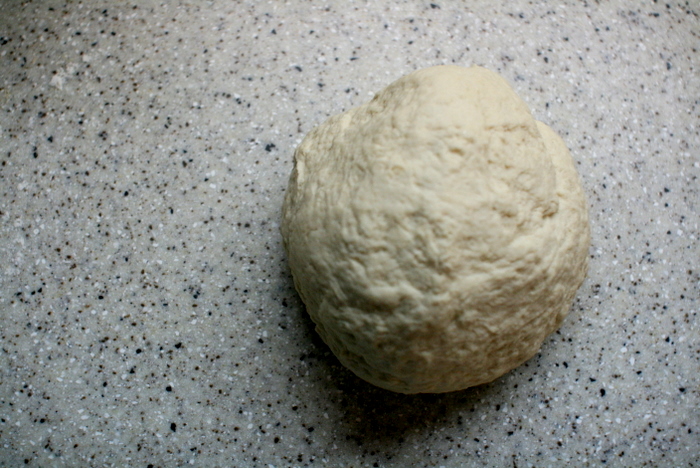
  1. Pour flour and salt into a large bowl. In a mea­sur­ing cup, heat the water for about 20–30 sec­onds. Mix the yeast, sugar, and olive oil with the warm water, stir­ring until yeast and sugar is dis­solved and let this sit for a few min­utes. Cre­ate a well in the bowl of flour and slowly pour in the liq­uid, using a fork to stir the flour in. Keep pouring/stirring until every­thing is incor­po­rated. At this point, the dough will be loose and shaggy. There will be a lit­tle excess flour at the bot­tom of the bowl, but that’s fine.
  2. Dump the mix­ture onto a clean sur­face and start to knead, draw­ing in the loose flour. Knead for a few min­utes, or until fully incor­po­rated and dough is smooth and springy.
  3. Lightly coat a clean, dry bowl (I just wash and dry the orig­i­nal flour bowl) with olive oil, and place the ball of dough into the bowl, turn­ing over once or twice to coat with olive oil. Cover this with a damp tea towel and set aside. Now, you can grate your cheese and pre­pare what­ever other top­pings you plan to top the pizza with, or go check your Face­book for a bit.
  4. After one hour, the dough should be roughly dou­bled in size, and lightly dot­ted with bub­bles. Turn the dough over on a lightly-floured sur­face (there will be enough oil to keep in from really stick­ing), and punch the dough down– lit­er­ally, give in a few good whacks with your fist. Split into two even parts, wrap one with saran wrap and store in the fridge or freezer for another use. Or pre­pare to make two pizzas.
  5. At this point, pre­heat the oven to the high­est tem­per­a­ture– my oven goes to 550F.
  6. Knead the dough in front of you once or twice over itself, and roll into a ball. Start to flat­ten out the dough– I like to use my fin­ger­tips first and then use a roller to get it nice and thin, but even pulling and pinch­ing can do the trick if you like a thicker crust. I try to get the dough as thin as pos­si­ble with­out tear­ing, because both B and I like a thin crust.
  7. Spread a gen­er­ous bit of olive oil onto a large bak­ing sheet, and trans­fer the rolled-out pizza dough on the sheet. Now you’re ready to assem­ble the pizza, using what­ever com­bi­na­tions of tomatoes/cheese/miscellaneous top­pings you desire.
  8. Place the pan on the top rack of the oven– I’ve found that this will pre­vent the bot­tom from burn­ing too quickly in my reg­u­lar bak­ing pan (if you have a pizza stone, you’re awe­some and don’t have to heed this cook­ing advice). After about 15–20 min­utes, turn the oven to broil, and let the top­pings siz­zle, watch­ing care­fully. Take the pizza out of the oven after another minute or two, and let it rest for five min­utes for the fla­vors and cheese to set.
  9. ENJOY it with a good glass of wine or beer.

My lime lady

Like gar­lic and onions, I feel like most Amer­i­cans (myself included) have got­ten so accus­tomed to the year-round sup­ply of super­mar­ket lemons and limes that we for­get they are just like every other grow­ing food– sea­sonal. And regional.

Limes are not eas­ily found in this part of the world, even though you would think our prox­im­ity to the heavily-used lime regions of Thai­land would result in its spread into South­ern China. As I approach a full six months of hav­ing moved to China (holy cow!), I’m get­ting a good idea of the avail­abil­ity and sea­sonal tran­si­tions at the mar­ket, but there’s still a lot for me to learn. You may remem­ber the time when I was excited to bring home a ripe, juicy, large lime, only to dis­cover it was an orange!?

You can imag­ine how excited I was a few months ago when, as a friend was leav­ing post, he men­tioned he had a “lime lady”. I made sure to take care­ful men­tal notes as he described which alleys to turn left, approx­i­mately how far down the street to go, and most impor­tantly how to say lime in chi­nese– 请柠檬, which directly trans­lates into green lemon. I real­ize what I’ve just described may sound like some sort of ille­gal ven­ture, but we fre­quently acquire goods in this man­ner in Guangzhou. In this city of shop­ping, we have friends who have shown us their “cable lady”, their “com­puter guy”, their “cheese peo­ple”, their favorite “pearl shop”, and the “box folks” (where they sell wooden boxes for all your mahjong desires).

The lime lady isn’t par­tic­u­larly easy to get to, nor is she par­tic­u­larly friendly, but thanks to her, I can now sit back and enjoy a mar­garita (on days when we don’t indulge in a cool­ing Pimm’s Cup), com­plete with a salted rim and a wedge of lime.

Clas­sic Limey Margarita

for two–

  • 4 oz. sil­ver tequila
  • 1 1/2 oz. fresh lime juice
  • 1 oz. grand marnier (or prefer­ably, Cointreau)
  • 1/2 oz. sim­ple syrup
  1. Run a lime around the lip of two tum­blers, and dip each into a plate of kosher salt to coat the rims.
  2. Com­bine ingre­di­ents with crushed ice in a cock­tail shaker
  3. Strain, pour into two small tum­blers over ice. Gar­nish with a fresh lime.

for a pitcher–

  • 2 cups tequila
  • 3/4 cups lime juice
  • 3/4 cups cointreau
  • 1/2 cup sim­ple syrup
  1. Com­bine all ingre­di­ents in a large pitcher with ice.
  2. Make new friends.

Mango Cucumber Salsa

We miss Mex­i­can food a lot here. It’s like they say, you never know what you have until it’s gone– and grow­ing up in Cal­i­for­nia, where there are no short­age of tacos and bur­ri­tos and hot dogs wrapped in bacon (those are Mex­i­can, aren’t they?), we’re suf­fer­ing a bit here. Not to men­tion, I would kill for an elote from Café Habana right now (plenty of fresh corn at the mar­ket– but no cojito cheese for miles!)

When the recent issue of Saveur mag­a­zine rolled around, with it’s tan­ta­liz­ing cover of crispy tacos and bold text boast­ing “Secrets of Mex­i­can Cook­ing”, I was deter­mined to find a recipe that I could recre­ate, or at least adapt, here in South­ern China. After all, I find there to be many sim­i­lar­i­ties in Asian and Latin cook­ing– there wasn’t that huge Asian Fusion spike in the 90’s for noth­ing, let me tell you…

But I soon real­ized that most authen­tic Mex­i­can recipes call for very spe­cific dried or fresh chiles, or the need for good tor­tillas– none of which I are avail­able here. I toyed with the idea of sub­sti­tut­ing local chi­nese dried chilies in place of the New Mex­ico or Gua­jilo chiles. Though excel­lent and pow­er­ful in Chi­nese cui­sine, I doubt they would gar­ner the same savory Mex­i­can fla­vor I am crav­ing (would they? Does any­one know?). Per­haps my trip to Mex­ico City in the sum­mer will be just as much a pantry expe­di­tion as it will a reunion with friends…

In the mean­time, I’m still seek­ing out some good recipes and some good tricks to recre­ate the fla­vors of Mex­i­can cui­sine in my own kitchen. This week­end I made this shred­ded chicken taco dish again, an easy adap­ta­tion for a Guangzhou kitchen. Look­ing through a huge list of recently book­marked Cinco de Mayo themed recipes, I re-discovered the web­site Muy Bueno Cook­book along with this recipe for a mango salad, rem­i­nis­cent of the chile sprin­kled mango and jicama sold from carts on the street cor­ners in down­town LA. Rather than a chunky salad, I pre­ferred to scale it down to a salsa, and with magoes and cucum­bers both sold pro­lif­i­cally at the wet mar­ket, it was a no-brainer. The recipe called for plenty of chile pow­der in the salad, but I wanted a more nuanced spice in this salsa, and so also grabbed from the piles of mild pep­pers at the market.

Cucum­bers and pep­pers (along with taro root dis­played) at the wet market

Grow­ing up, I would fre­quently sit on a stool in the kitchen as I watched my mother cook in the kitchen. She would edu­cate me as she went along on the impor­tance of clean­ing up as she cooked, set­ting things out before she started stir fry­ing, and mak­ing sure to wash the dishes as she went along. At the time, I thought she was just being nit­picky, and franky hated these “lec­tures” I got when all I wanted was to watch the gar­lic and gin­ger siz­zle at the bot­tom of the skil­let. But I now real­ize that she was sim­ply teach­ing me the basics of what all good chefs know– set­ting your mise en place, mak­ing sure your work­sta­tion is san­i­tary and orga­nized. Funny how every­thing your mom tells you when you are lit­tle sud­denly makes sense when you’re older…

She also showed me other impor­tant skills, one being how to wield a knife. My mother could (and still can) pul­ver­ize gar­lic into the tini­est minced flecks, slice gin­ger into the thinnest sliv­ers, and art­fully cut car­rots and firm tofu into perfectly-square lit­tle cubes. The Chi­nese believe that the pro­por­tion of shapes and sizes of a dishes’ com­po­nents play a big part in the fla­vor and taste of a dish. Hence, the Chi­nese have an exten­sive vocab­u­lary for the prep work of dif­fer­ent cuts of meat and veg­eta­bles– sig­nif­i­cantly more than their West­ern friends.

When­ever I’m prep­ping a dish like this salsa, spend­ing much longer than any­one typ­i­cally would to make sure the shal­lots are appro­pri­ately, I com­pare them to how my mom used to do it. When peo­ple make salsa and their toma­toes are cut into huge, uneven chunks, the onions are in unap­pe­tiz­ingly large pieces, and the cilantro is not even chopped, I am a lit­tle uneasy. Maybe you’d say I was spoiled– I’d say I was taught well. In any case, I’d con­sider this a secret to a good salsa, or a salad, or any freshly chopped mixed veg­etable dish.


Mango Cucum­ber Salsa

inspired by this recipe from Muy Bueno Cookbook

Ingre­di­ents:

  • 4 small, ripe yel­low mangoes
  • 3 kirby cucumbers
  • 3 shal­lots, minced
  • 1 small bunch chi­nese cel­ery (or, one rib of reg­u­lar cel­ery), leaves discarded
  • 2 mild green pep­pers, minced
  • 1 mild red pep­per, minced
  • 1/4 cup cilantro, stemmed and packed, finely chopped
  • juice of one lime
  • salt, to taste

Direc­tions:

  1. Peel and cut man­goes into a small dice. The eas­i­est way to do this, I’ve found, is to: cut the stem-end of the mango off so you can eas­ily and securely set the mango on its end on a cut­ting board. Using a sharp knife, slice the peel off, down­wards, along the length of the mango. Keep turn­ing and trim­ming the peel off until your mango is “naked”. Then care­fully cut the meat off the pit in the largest slices pos­si­ble, and dice from there.
  2. Seed the cucum­bers, cut into spears and then a small dice
  3. Com­bine shal­lots, cel­ery, red and green pep­pers with lime and salt to taste. Mix well, allow­ing the shal­lots to mac­er­ate in the lime juice to lessen its sharp­ness. Com­bine mango and cucum­bers, and toss to mix thoroughly.
  4. Cover and let sit in the refrig­er­a­tor for at least 20–30 min­utes. Can be pre­pared a day ahead, if nec­es­sary, but shouldn’t be kept more than a cou­ple of days– which prob­a­bly won’t be a problem!

Yield: approx. 3 1/2 cups of salsa, or enough to feed 10–12 peo­ple for a taco dinner!

Cinnamon Rolls, and how not to make 3 dozen.

Nowa­days break­fast is some­times a slice of toast, yogurt with gra­nola, or oat­meal, and more often than not just a cup of strong cof­fee. Grow­ing up my fam­ily didn’t have very many elab­o­rate break­fasts, and although we were required to have din­ner together every night, break­fast was a come-as-you-awaken sort of deal. When I go home to visit my folks these days, it’s still the same deal. Liv­ing on my own, it’s the same deal.

Unlike many fam­i­lies my dad was the one in charge of break­fast in our house­hold, also assum­ing the roles of lunch packer, sand­wich maker, waker-upper, and school chauf­feur when we were grow­ing up. He was the only one in our house that was able to get out of bed at 6am each morn­ing every day of the week. On the week­ends when there was no school and no early morn­ing piano lessons, if we were out of bagels or crois­sants he would flip open the Joy of Cook­ing and make a batch of pan­cakes, which is to this day one of my favorite olfac­tory mem­o­ries grow­ing up.

This week­end, I thought of my dad and his pan­cakes as I looked up a recipe for cin­na­mon buns. I was inspired…what was I inspired by? I think I saw some­thing online about cin­na­mon rolls, and knew I had all the ingre­di­ents in the pantry [flour (check), sugar (check), yeast (check), cin­na­mon (check) Yes!] So I felt inspired (which in cook­ing terms, also means I had a crav­ing…), but I didn’t have much after that. We never had these grow­ing up– my dad never made them, we never asked for them. Not as if some­thing this sweet and but­tery would have made it to our kitchen table, any­way. As I was scour­ing the inter­net for the per­fect recipe for cin­na­mon rolls, I des­per­ately wished that I had a frame of ref­er­ence– a smell, a secret ingre­di­ent, a method of prepa­ra­tion– to refer to, as I would with a recipe for pan­cakes. But I didn’t, and rely­ing on my own kitchen gump­tion, I decided to mash-up two dif­fer­ent recipes, roll up my sleeves, and see if I could make these cin­na­mon rolls work. Intend­ing to make a mere dozen, I ended up pro­duc­ing a whop­ping three dozen cin­na­mon rolls. But don’t worry, two dozen were gone by Sat­ur­day evening thanks to sweet-loving friends (sweet, lov­ing friends?).

So, here’s my take on cin­na­mon rolls. It’s the first time in awhile that I wasn’t com­pletely sure I was going to have suc­cess with a recipe. Thank­fully, it wasn’t the first time that I didn’t have suc­cess with a recipe.

In an effort to keep all my lovely read­ers and friends thin, here is my adapted recipe, halved, and adapted a lit­tle more.

Cin­na­mon Rolls

adapted from the Smit­ten Kitchen and Home­sick Texan recipes

Ingre­di­ents:

For the dough:

  • 1 cup whole milk
  • 4 Tbsp. unsalted butter
  • 1/4 cup sugar
  • 2 1/2 cups All-Purpose flour
  • 1 egg
  • 1/2 tsp. bak­ing powder
  • 1/2 tsp. bak­ing soda
  • 1 pkg. Active Dry Yeast

Fill­ing:

  • 3/4 cup packed golden brown sugar
  • 2 Tbsp. ground cinnamon
  • 1/4 cup (1/2 stick) but­ter, at room temperature

Glaze:

  • 3/4 cup pow­dered sugar
  • 1/4 cup milk
  • 1 Tbsp. Bailey’s liqeur
  • 1 Tbsp. fresh brewed coffee
  • 1/8 tsp. salt

Direc­tions:

  1. Mix the milk, but­ter and sugar in a pan over medium heat, stir­ring con­stantly, until the but­ter and sugar melt. Turn off the range and allow the mix­ture to cool slightly, about 30 minutes.
  2. When the mix­ture is warm (you can stick your fin­ger in to test it out), stir in the yeast. Let this sit for a minute.
  3. Add 4 cups of flour incre­men­tally, stir­ring with a wooden spoon as you go along to make sure the liq­uid is incor­po­rated nicely. Mix in one egg. Cover with a lid, and let this sit for 1 hour.
  4. After an hour, mix the remain­ing 1/2 flour with the bak­ing pow­der, bak­ing soda, and salt. Incor­po­rate into the bat­ter, turn onto a floured sur­face and knead a few times until dough is smooth but still slightly sticky. Cover with a tea towel and let this rest for another 20 minutes.
  5. While the dough sits, mix fill­ing, incor­po­rat­ing the brown sugar and cinamon.
  6. Mak­ing sure the sur­face is still adaquately floured, roll out dough to about 11x16 inches, the dough should be at least 1/4–1/2 in thick. Spread the room tem­per­a­ture but­ter on the rec­tan­gu­lar piece of dough, leav­ing about a 1/2-inch bor­der on the three sides clos­est to you. Pour the cin­na­mon sugar mix­ture over the but­ter, cre­at­ing a thin, even layer, if nec­es­sary spread­ing with your hands.
  7. Start­ing at the longer edge fur­thest from you, roll the dough inwards, towards your body, press­ing and tuck­ing with a bit of pres­sure to make sure the roll sticks to itself.With the seam side down, cut the rolled log into ~3/4 inch slices.
  8. Brush two bak­ing dishes with but­ter, and arrange the rolls about 1 inch apart on the dishes. Let rolls rise for another 30 min­utes (a lot of ris­ing, I know!). Pre­heat oven to 375degrees
  9. Bake at 375 for 18–20 min­utes, or until tops are golden. It’s best to bake these on the top rack, so the bot­toms don’t get too browned and crisp.
  10. Remove from oven, and invert onto a rack to cool for about 10 min­utes. Once rel­a­tively cool to han­dle, flip rolls up and glaze. (To make glaze: com­bine all ingre­di­ents, stir until smooth)

yield: between 12–16 cin­na­mon rolls

Yes, these looked as good as they tasted. They should have, with the amounts of but­ter and sugar. Like the pan­cakes my dad made, I hope one day I’ll per­fect this recipe so my kids will have some­thing to talk about.

Related Posts Plugin for WordPress, Blogger...